5 Mindful Habits to Implement in 2020

Happy New Year everyone!

I hope you all had a fun time celebrating the new year and decade last night. As I’ve stated before, I’m not a huge fan of New Year’s Resolutions because of the notion that no one will end up sticking to theirs attached to them, but I do love setting new goals and trying to implement new things into my life at the start of a new year. And of course, if new year’s resolutions work for you, go for them! I personally set goals very similar to what people normally have as their resolutions- I just remove them from that title. Regardless, there are always little habits and improvements to be made that can increase your productivity and enhance the course of your day. Keep on reading if you want to hear about five little changes you can make throughout your day to make 2020 the best year yet.

  1. Try to stay off your phone when you first wake up – This is a bad habit that I’m definitely guilty of giving into. You think you’ll just check social media and hop out of bed to get ready, but it almost never ends there, does it? I recommend getting out of bed as soon as you wake up and getting breakfast/exercising/doing the first step of your morning routine, and then you can settle down for a couple minutes and check your phone. I feel like going on your phone in bed somehow makes you spend wayyyy more time in bed and online, making that the center of your morning, rather than waking up and starting your day.
  2. Make to-do lists (and separate them!) – I’m a big believer in lists for dealing with almost anything that’s a part of my life. I talk about lists a lot, and you can probably tell by the amount of listicles on this blog that it’s how I organize my thoughts. You probably know making to-do lists is a good way to remember things and start being productive, but what about those times where your to-do list seems ENDLESS and things are constantly being added? In those cases, I often feel even more overwhelmed and stressed when looking at my long list. That’s why you should separate your to-do lists into categories and/or timeframes! I personally organize mine by timeframes- I have one huge master to-do list in my notes with a bunch of stuff on it (both long-term, short-term, and even some “optional” things I would just like to do), but then I have a more immediate to-do list of things I need to do that specific day. This helps me actually set my course for the day without getting distracted by other tasks that aren’t as important, and it prevents me from getting more overwhelmed than I already am.
  3. Meditation – Again, this isn’t exactly an original idea, but it’s how you implement it that makes a difference. Meditation often scares people off, especially if they don’t have a lot of experience or background. People will end up abandoning it after one or two tries even if they enjoyed those first attempts, just because it seems like a lot of effort and they’re not sure how much they can actually get out of it- I’m guilty of this. However, if you use a guided app on your phone for just a couple minutes each day, or even just when you’re feeling particularly stressed, it becomes a lot more approachable. I personally use the app Headspace, and it really does clear my head- I often forget that I can use it to take a breather on tough days, but I’m going to work on making it a more regular habit this year.
  4. Put extra effort into one part of your daily routine/appearance everyday – I wasn’t sure how to word this in a better way, but basically just pick one thing each day that you’re going to “dress up” a little. People often say when you feel good about your appearance/outfit/etc. you feel more confident, and therefore have a better day. I personally do not care enough to dress up everyday, wear makeup, and coordinate accessories. However, I do like doing a little something extra for myself. Whether it’s a spritz of my favorite perfume, a coat of lipgloss, or color-coordinating my shoes to my shirt, focusing on one little way to make me feel like I tried when getting ready helps a lot with attitude and confidence throughout the day. If you’re super into this you can obviously focus on putting effort into getting ready in every way everyday, but for someone like me who’s kind of lazy when it comes to fashion and beauty, one little change is enough.
  5. Taking things one step at a time – This isn’t a tangible habit that you can just ~do~, but I think it’s a great one since it can relieve a lot of stress and anxiety. It’s important to stay in the present, especially when you think of how quickly time passes (I mean, how is it 2020?), so being self-aware of how much you’re taking on at a time is super important. There’s only one of you and you can only be doing one thing at a time, so don’t get ahead of yourself when planning for the future unless it’s necessary planning that you can control right now. I carry a lot of stress with me from day-to-day, but it’s so much easier to manage when I only focus on what I am able to do for myself in that moment, and tackle one challenge/task/problem at a time.

I think these habits are all manageable things you can incorporate into your life, so hopefully you’re inspired to try them. That being said, remember that these are not just for 2020, “the new year”, or any time in particular. This time of year is when a lot of people tend to be setting goals and trying to change what they didn’t like about the previous year, but it doesn’t mean you have to confine yourself or pressure yourself into starting new things just because it’s a “new year”- that’s basically just a title and a gateway for a lot of people. You can do whatever you want, whenever you feel comfortable! Let me know if any of these things work for you, and have a marvelous first day of 2020! 🙂

Brooke
How to Learn From Your Mistakes – High School Edition

Welcome back everyone!

I know we’re all still on break, but I figured before the new year and semester start, I would throw out some advice for you freshmen. Honestly, anyone in high school (or middle school!) could use this advice; I just figure that kids my age or older would already have learned similar lessons. If you’ve had a rough first semester or rough 2019, here’s some advice on how to use your past to enhance your future! Trust me, it’s not as hard or ~deep~ as it sounds.

  • Be able to recognize your flaws – Being aware of your mistakes is the first step to learning from them. Think about the past few months: what went well, and what could’ve gone better? Why did the things that went wrong occur? What part did you have in them? These are the questions you should reflect on when you’re thinking about what you can change in the future.
  • Take responsibility- don’t blame others – Others may have had a part in your mistakes or shortcomings, but you can only worry about yourself. Own up to anything you’ve done wrong, and leave anyone else to do the same for themselves.
  • Apologize when you’ve done wrong – This goes along with taking responsibility, but it’s so important to apologize to anyone you may have hurt or impacted negatively. It goes a long way in showing you understand how your actions affect others- mustering the courage up to do this shows a lot of maturity.
  • Accept others for who they are – A big mistake a lot of people make (I definitely have quite a few times) is trying to change their friends or complain about their flaws and then expecting them to change. Sometimes people do change, but you’re not the one who’s going to change them. If you’re going to surround yourself with people, make sure you know they’re people that will lift you up and make you happy to be around. If that’s not the case, find new friends- it’s up to you to make those choices.
  • Stay open-minded to change – Sometimes we look around at all the things we wish we could change about other people, but it’s completely out of our control. So what is in your control? Well, you! If you’re able to recognize your mistakes and flaws now, you should see the things that you wish you could change about yourself. It’s completely up to you to make an effort to change these things- nobody’s perfect, but you can try to be a better you.
  • Think about your good characteristics/strengths – What are the best things about you? Your favorite parts, and/or the characteristics other people compliment you? These are the traits you should try to bring out in yourself most often, and reflect in your everyday life. Again, nobody’s perfect, but it’s best to show off your best self.
  • Be as kind and friendly as possible – This isn’t really about learning from your mistakes, but it helps you put your best foot forward in new situations/when meeting new people and sets you up for better outcomes and relationships in the future. Also, people who may have known you in the past when you weren’t as proud of yourself can see that you’re making an effort to be a better you and change.
  • Understand that you’re going to make a lot more mistakes – Everyone does. As I’ve said multiple times, nobody’s perfect. This advice can help you prevent some silly mistakes, but everyone gets themselves in tough spots from time to time. Build your internal “toolkit” and problem-solving skills, and you’ll be just fine working yourself out of future issues.

I know some of this advice is pretty generic, but I think that’s kind of the point. We’re all getting older, and we have to actually apply the typical advice and wisdom adults have always given to us. I know I’ve matured a ton in the past couple years, and I’m still definitely not a perfect kid. That being said, let’s be our best selves in 2020 and make it an amazing year.

Brooke

Calligraphy for Beginners – How To Get Started

Welcome back everyone!

I’ve always been amazing by the beautiful calligraphy and handwriting of bullet-journalers and otherwise artistically talented friends/people/Instagrammers, but I’ve never really made an effort to try and learn myself. That is, until recently. Over the past month or so, I’ve on-and-off worked on teaching myself the basics of calligraphy. I already had decently-okay cursive, so I just needed to watch a couple of YouTube videos and practice. Trust me- if I can do it, you can too. That being said, I know it’s intimidating (that’s the reason I held off on even trying for so long), so I figured I would make this little guide for people in similar situations.

  1. Improve your normal cursive – You’ll want to have pretty neat/legible cursive before you embark on your calligraphy journey. You don’t have to have perfect writing by any means- just be confident enough in your cursive that you can take the next step.
  2. Watch YouTube videos – This is how I figured out most of the basics- the main point being making your downstrokes on all your letters thicker. There are also lots of books available for purchase that teach the basics of calligraphy, but I think videos are more helpful because you can see the way the “professionals” do it in real time, and watch it over and over as many times as necessary while you follow along. I guess it depends what kind of learner you are though, so if you think the books will be worth it for you, totally go for it!
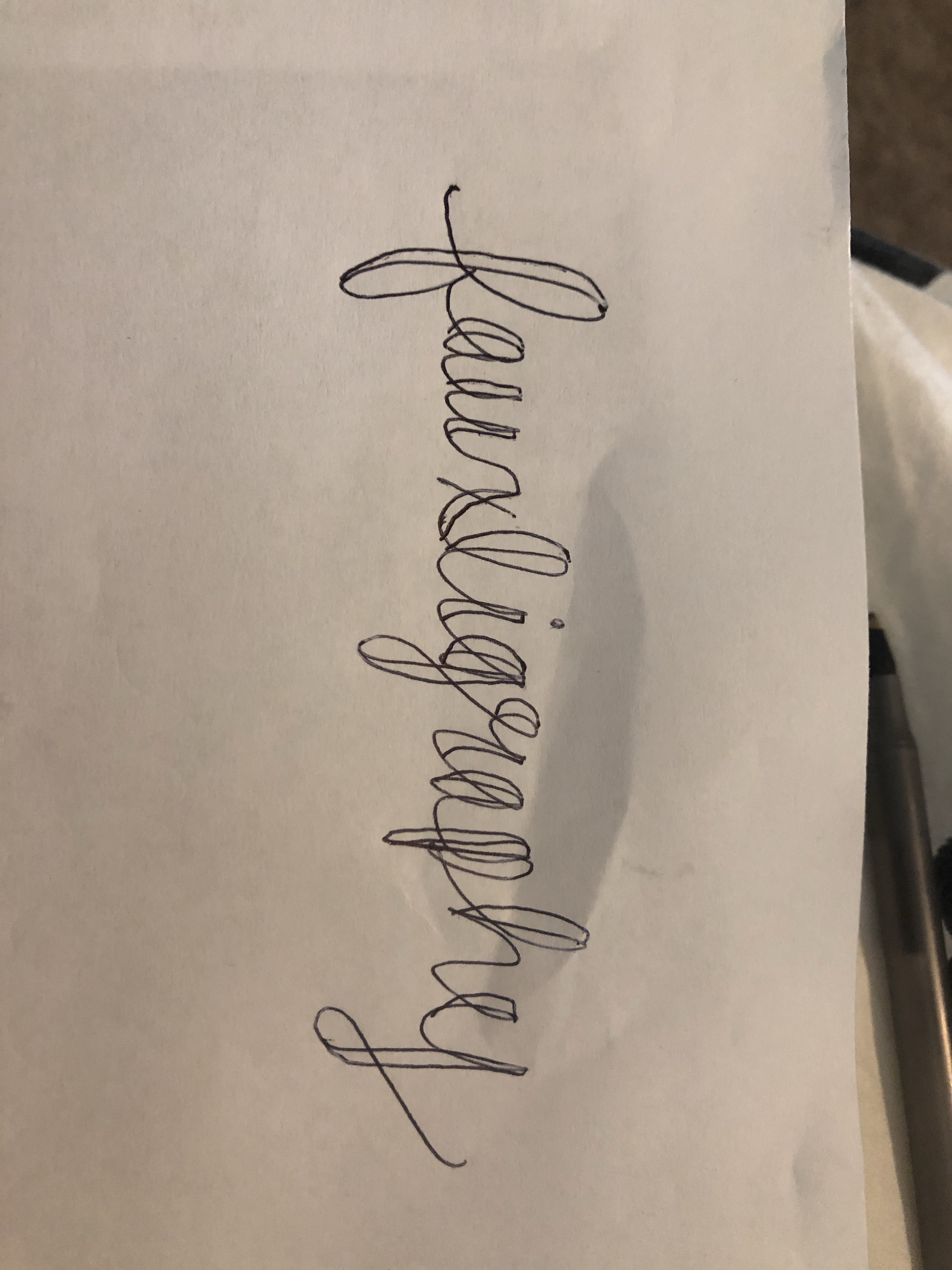
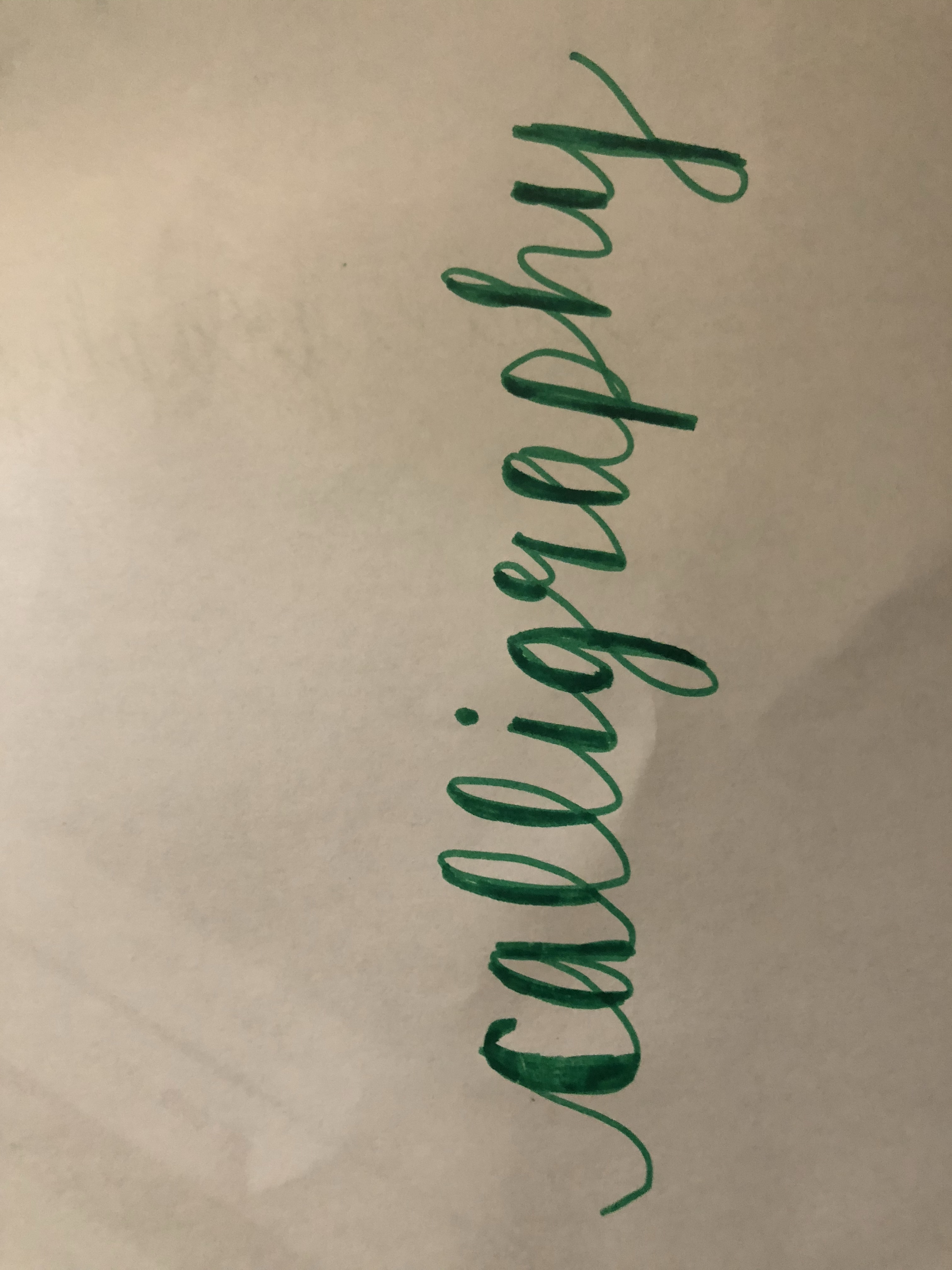
  3. Start with fauxligraphy – Most videos/books/guides will explain this in more detail, but it’s basically where you’ll write in normal cursive and then outline and color in/thicken the downstrokes of the letters. It can take a while (which is why actual calligraphy is more efficient) but it helps so much in the long run and I think it’s an important step before you attempt the real deal. Also, it still looks great- if you don’t have “professional” calligraphy supplies, you may even prefer fauxligraphy until you’re willing to invest in brush pens and the like. I’ve been sticking to fauxligraphy for the most part since it works fine for my purposes and I haven’t gotten a chance to buy supplies that would make actual calligraphy easy to do.
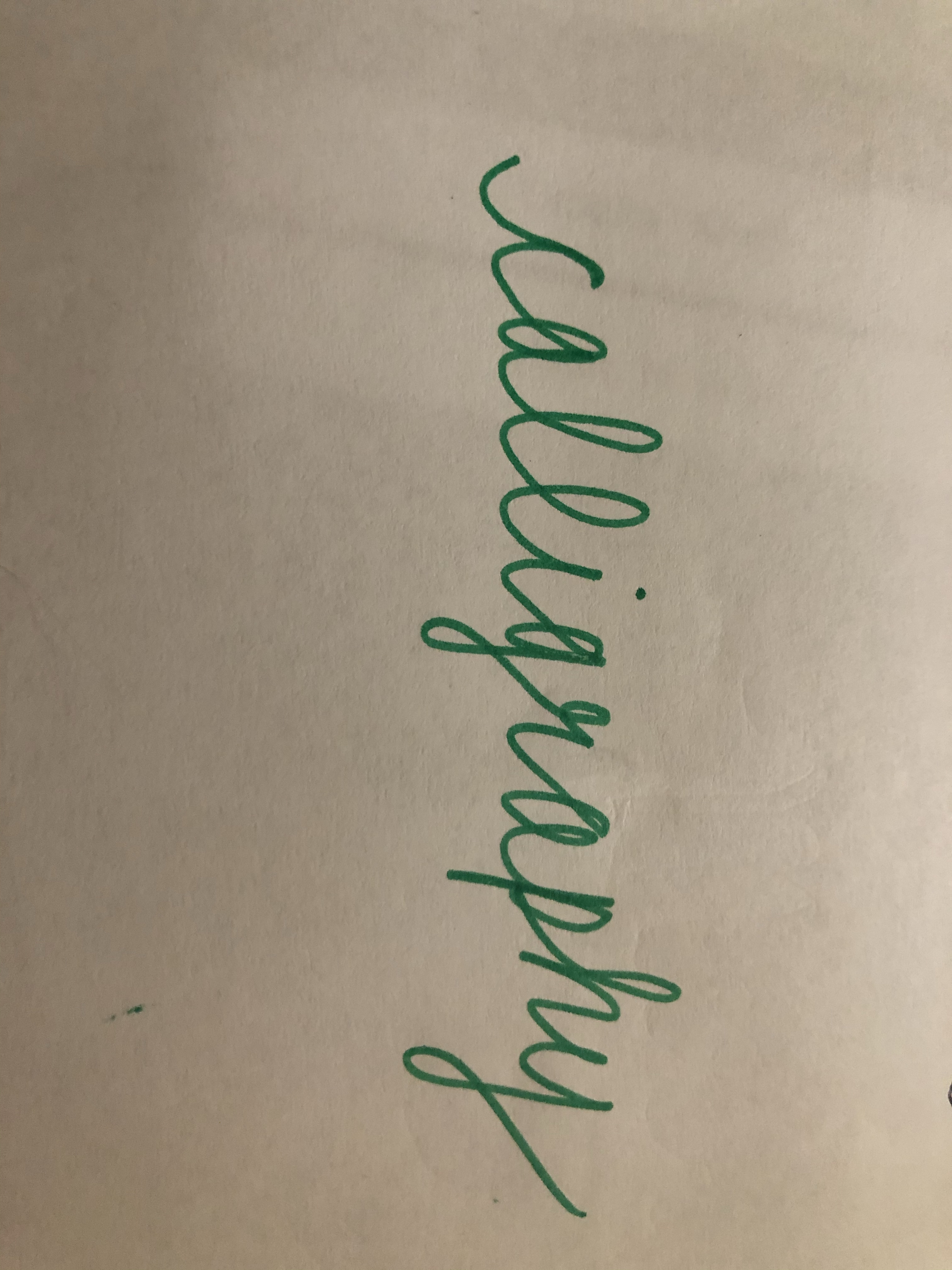
  4. Transition into doing actual calligraphy – As you get more comfortable with fauxligraphy, start doing the thickened downstrokes as you write in cursive, rather than outlining and coloring in afterwards. You’ve made it to the real deal! It should get easier, quicker, and more natural as you keep practicing.
  5. Practice a lot!!!! – I found the best way to practice was to look up examples of words/sentences in calligraphy and try to copy them. You can just look up calligraphy on Google Images, or you can even make a Pinterest board full of inspiration. You might also come across practice worksheets, which can be helpful as well.
  6. Experiment with styles – Everyone’s handwriting is a little bit different, therefore everyone’s calligraphy and lettering will be unique as well. If there’s one particular style of writing you like, I suggest finding as many inspiration pictures as possible and copying it. Otherwise, just keep practicing and along the way you’ll find what’s most natural for you.
Step 1- practice cursive!
Step 3- before coloring in, outline the downstrokes of each letter for fauxligraphy!
Step 3- result! It looks a little messy since I used two different mediums (pen and Crayola skinny marker) but I wanted to do that to show the effect. I think it still looks pretty cool 🙂
Step 4- I am nowhere near perfect and I would like to get actual calligraphy pens, but I’m proud of my improvement so far!

I hope this inspires you to improve your own handwriting and give calligraphy a try. I’m definitely not claiming to be an expert or an incredible teacher, but I wanted to show you guys it’s definitely possible to do without being super artsy. Another disclaimer: you totally don’t need to buy all the official calligraphy supplies such as brush pens and the like right away! I just use highlighters, markers, and pens- it does make it a bit harder and sometimes I have to resort to fauxligraphy, but it has a similar end result and is still fun to practice. If you end up being really into it, then totally go buy all of the supplies; I just wanted to put it out there that it’s not something you have to spend money on in order to do.

Happy writing!

Brooke

5 Reasons to Shop Local

Welcome back everyone!

I’ve been posting a lot about gift guides, Christmas, and shopping lately, mainly mentioning things you can buy online or in well-known chain stores. This is mainly for your convenience, since mentioning a local shop in my town doesn’t offer much help for you guys looking for gifts; however, don’t mistake this for me ignoring my local shopping options. Today, I’m going to be giving you five reasons why you should shop locally, and why I try to as much as possible.

  1. You’ll find more unique items – Shopping at the same five stores in the mall as everyone else results in always having the same stuff as everyone else. That’s not necessarily a bad thing, but sometimes you want to get something special that no one else will have, especially for a gift. Going into little boutiques where the inventory changes often and there’s a wide variety of things for sale increases your chances of finding something unique.
  2. It can be a better deal – Chain stores can completely overcharge for their products because they know people will buy it. At local shops, the prices are often cheaper, but you’re not sacrificing quality for a deal.
  3. You can establish personal relationships with the employees – There’s a boutique in my town that I go to fairly often and the employees are always so kind and try to make shopping a personal experience. They’ll pick out things for you to try on that they think would look good on you, and they’ll let you know what the best deals are.
  4. It’s often more sustainable – Ordering lots of items online results in a lot of plastic wrap and other waste related to packaging being shipped to your door, only to be thrown away right afterwards. If you shop in local stores with possibly handmade products, there’s usually a lot less waste involved.
  5. Chain stores and online marketplaces are killing brick-and-mortar businesses – My mall used to have tons of cute and unique stores- now it’s fairly empty and only has a few huge chains like Victoria’s Secret, Macy’s, PacSun, etc. This goes for restaurants too! It’s important to

I hope this inspired you to do some of your holiday shopping at your local boutiques or even craft/artisan fairs. There’s always some new brand or artist waiting to be discovered, and you could be the one to discover it! Happy shopping 🙂

-Brooke

5 Steps to Succeed in Finals Week

Hello everyone!

I know finals week is coming up for everyone either this week (hopefully this post isn’t too late) or next week, so this post is going to be a short and sweet one for you guys to read and get on your way studying. My school does finals in January after winter break, but these couple weeks of December are so packed with work and tests that it’s basically pre-finals. Either way, this a busy time for pretty much everyone, and the stress can negatively impact the most put-together of students. Today I have five tips for success in finals week, hopefully with the least amount of stress possible.

  1. Pace yourself – Ideally, your finals will be spread out throughout the week (my school does block schedule so we only have two classes a day). If this is the case, place most of your focus on whatever’s coming up first. The only exception would be if there’s one class you’re really struggling in or need to bring your grade up in- then you should put that final first no matter what, and spend the most time on studying for it. Other than that, take it one final at a time and study accordingly. It minimizes a ton of stress if you’re only thinking about one big test, rather than anywhere from four to six.
  2. If your teacher doesn’t give you a study guide, make one – I find this is one of the best ways to study if you’re not sure what to do and you don’t want to passively look over your notes. Some teachers give study guides, which is excellent because it’s straightforward to study for those finals- you just complete the study in detail, then go over it and quiz yourself/have other people quiz you. However, if your teacher doesn’t provide one, you should definitely still make your own! Go through all the units and write down key concepts and their definitions/explanations, and do tons of practice problems for math and science subjects.
  3. Have a balance of studying alone and group studying – Studying alone shut up in your house will drive you stir-crazy and you may lose focus, but sometimes studying in a group can get you off-topic. The answer? A balance of both: review the material on your own and make your study guide so you’re familiar with the basis of everything, then go study in a group and quiz each other, asking questions about things you’re confused on.
  4. Focus on school – Finals week is only one week, and it’s super important for your grades. Therefore, it should take priority over other things like extracurriculars for the week. Obviously honor any important commitments like work or sports practice, but it’s fine to let other things slide for a few days.
  5. Go see your teachers for extra help – This is a good idea for two reasons. One, if you need the help, it’s so important to ask for it. Your teachers should be happy to clear up any confusion you have and go through some review with you if you come in with specific questions. Two, they’ll often give you some insight and subtle hint as to what will be on the final. Whenever I’ve gone in to ask a teacher for help, he or she will point out what I really need to know.

Good luck on your finals everyone! Remember there’s a light at the end of the tunnel, and this will all be over in a flash. I have faith all of you will do great, especially if you utilize these tips.

-Brooke

5 Ways to Make Reading Fun (for Book-Haters)

Welcome back everyone!

I talk about this a lot, but I love to read. I can’t imagine my childhood without the hundreds of books I pored over, and weekly trips to the library. I’m really lucky that my parents introduced me to reading so young and encouraged me to keep reading and find books I loved. However, I know that not everyone is lucky enough to grow up the same way, or even if they are, not everyone ends up liking reading as they get older.

Reading is so beneficial even if you’re not a book-nerd; it helps you grow your vocabulary, it provides an escape from the outside world, and books will always teach you something new. If you’re one of those people who dreads required reading for school or can never follow a plot line: never fear, here are five ways you can make reading more enjoyable.

  1. Try nonfiction – I know nonfiction sounds boring at first; there’s no creative fantasy worlds being carefully crafted by the authors, that’s for sure. However, in a lot of cases, people who don’t like reading fiction can find nonfiction books specifically catered to their interests. For example, read a book written by your favorite celebrity, or read a self-help book related to something you’ve been struggling with. There’s a book for everyone out there, and nonfiction books catered to your interests are often easier to find than that of fiction.
  2. Find your niche/genre – Similar to how trying nonfiction can open you up to a world of books you enjoy, exploring different genres can completely change your perspective on the reading experience. Maybe you hate fantasy novels, but you’d really like murder mysteries, or vice versa. Think of what TV shows/movies you enjoy watching, and try to find something comparable in book form.
  3. Look for storylines or plot elements you can relate to – I always found I loved stories that brought in elements of relatability. This is why I tend to gravitate towards realistic fiction when I need something new to read. I think when people can relate to the main character or something about the main character’s life, they’re so much more invested in the story and can often connect with the overarching message of the book.
  4. Join a book club or create a discussion group with friends – If your friends are up for it, this is a great way to get more immersed into books. You’ll have a reason to keep reading on a timeline, and you can get some insight on why other people with different perspectives are enjoying the book. A shift in perspective can be just what you need to start enjoying reading!
  5. Read to learn – This is a more vague tip, but it honestly has helped me so much. This works more for required reading where you can’t choose what the book is, but you can use this outlook on whatever you read. Look at everything you read as an opportunity to gain insight on the world and learn something new- whether it’s a vocab word, something about history, or something specific to the themes and topic of the text. You’ll begin to enjoy the consumption of all this new information.

I hope this inspires you guys to get out there and read something new. If you happened to stumble across this post even though you do, in fact, enjoy reading, then I would love for you to leave some book recommendations down below. I plan to be doing some more book reviews and book-related content soon.

-Brooke

How to Choose a Poem to Submit to a Writing Contest – 5 Tips

Welcome back everyone!

A few days ago, I submitted a poem to the (now closed) Kenyon Review Patricia Grodd Poetry Prize for Young Writers contest. I hadn’t written a poem with the contest specifically in mind, but I knew I wanted to throw my hat into the ring and enter something. It took quite a bit of deliberation (along with me procrastinating until the second-to-last day to submit) to decide which of my poems I thought would have the best chance in the contest.

I am by no means a poetry judge or expert, but I figured I would try to help you fellow writers out by making a list of a few criteria to consider when choosing a poem or multiple poems for submission. I did my own research and read a few similar articles, so not all of these ideas are fully my own.

  • Consider whether it’s your most thought-provoking or powerful piece. If you want yourself and your writing abilities represented in a single (most likely short) poem, it has to be a showstopper. If you’re reading through your poems to choose one, go with your gut- the one that evokes the most feelings in you should usually be the one you choose.
  • Compare the lengths of your poems. In a lot of the articles I read online, it was mentioned that shorter poems often get chosen for publishing or contests. I’m not exactly sure why- maybe because they take up less space when being published? Either way, this is something to keep in the back of your mind.
  • Make sure your poem adheres to the rules and guidelines of the contest!! This is so important just because no matter how amazing your poem is, you won’t be able to win a contest if you don’t follow the rules. Make sure it fits any length requirements and it’s formatted appropriately for submission.
  • Weed out your cliché pieces from the mix. Unless you’ve put an interesting new twist on a cliché, your poem probably won’t stand out- there’s a reason why clichés are, well, clichés. You can look up lists of common clichés in poetry; that’s what I did, so you can use this one I found here if you want.
  • Some contests don’t give you a lot of background/information to go off of when submitting, but for ones that do, do your research. With the Kenyon contest I entered, I read past winners’ pieces and also read other pieces that are featured in the Kenyon Review unrelated to the contest. This gives you a clue on what kind of topics/subjects they like, and which of your poems would be the best fit for the contest.

Again, I want to clarify that I am not a poetry expert or contest judge, but I figured these tips could help you since they helped me in my own selection for a poetry contest. If you are planning on submitting to any poetry contests, let me know down below. I would love to chat with fellow writers and read some of your work.

-Brooke

Why Extracurriculars Matter

Playing a sport and partaking in other “typical” high school pastimes can be fun, but is there some other advantage to participating in extracurriculars? The short answer is yes: if you want to find out why, keep on reading.

In elementary school and middle school, I was never deeply involved in anything outside of school. I did lots of after-school enrichment classes and dabbled in sports as well as dance and gymnastics, but nothing ever stuck. Once the session my mom had signed me up for ended, I wouldn’t ask to continue. That all changed at the end of middle school/going into high school; once I realized all of my friends had at least one activity they were passionate about outside of the normal school routine, I knew it was time for me to find my own hobbies.

If you’re a late bloomer with exploring your interests like I was, that’s perfectly fine! Better late than never, and there’s still plenty of time to find something you enjoy. Before you get started, here’s a few reasons why it’s so important that you participate in these types of activities.

  • They relieve stress and provide an escape from schoolwork. We all know how busy life gets, and having an activity to look forward to can keep you motivated and make it easier to go through the school day. Do what you love, and it will bring joy into your day.
  • It’s important for college admissions down the line. Colleges want to see that you care about things outside of school and have taken initiative to pursue these interests. Get involved for the right reasons (not just to put another activity on your application) but still keep in mind that this is a way your extracurriculars can reward you in the long run.
  • You can input your extracurricular activities into RaiseMe to earn scholarship money for college. The more activities you have, the more earnings you can potentially get! Make sure to update your RaiseMe profile whenever you start something new- colleges love to see that you’re immersing yourself in different things, as I stated previously.
  • Activities can connect you with people you wouldn’t have met otherwise. Joining clubs or playing sports is a great way to meet new people and make friends. The more of a commitment an activity is, the more of a tight-knit group it will be (usually). If you’re spending a lot of time with a group of people that share the same interests as you, you’re bound to make fast friends.
  • You learn soft skills such as communication from extracurricular activities since you’re collaborating with other people in a new way. Depending on the activity, there are numerous skills you can gain and different ways you can be pushed out of your comfort zone. If you join debate, you’ll improve your public speaking; if you join a sport, you’ll improve your teamwork skills. 
  • The activities you participate in now can lead to an interest you’ll want to study in college or a potential career when you’re older. Using debate as an example again, you may discover you want to study law. If you do an internship, you may fall in love with that career field. Trying something new can open your eyes to something you never thought you would be interested in before.
  • They enrich your high school experience overall and will give you fond memories to look back on. Everyone experiences the ups and downs of high school, but it’s up to you to make the most out of it. Partaking in extracurriculars will make you a more well-rounded student and teach you life skills that you can’t learn inside a classroom.

I hope this makes the significance of extracurriculars a lot clearer. Regardless of the various benefits I listed, the most important component of an extracurricular is that you enjoy it. Life is too short to spend time doing something you don’t like, so keep digging until you find an activity you’re passionate about. Once you do, the sky’s the limit!

**This article was written as part of my RaiseMe internship. I am currently awaiting approval, but I hope they will be using it in some way on their site/as part of their platform. If you want to find out more about my internship or RaiseMe and what they do, I posted about it in early October when I found out I was accepted to their internship program.

-Brooke

Five Ways to Find the Right Hobby For You

Hello everyone!

Are you struggling to find a pastime to look forward to after school? Are you unsure of what you actually enjoy doing? Are you lacking in your extracurricular resumé? If any of these apply, keep on reading to find out what you should do!

There’s an activity out there to suit everyone’s interests and needs- you just have to be open to trying new things and do a little digging within yourself to find it. I know that I’ve personally tried so many different activities; some of them I liked, some I loved, and some I didn’t like at all. Here are five ways to make this search easier and root through the numerous options.

  1. Tag along to clubs/activities that your friends participate in. I would advise making it clear to the friend you go with that you’re just trying it out and that you might not end up committing to it, just so there’s not a misunderstanding. That being said, this is a great way to get involved in something new while still feeling comfortable! Trying new things is scary, but everything is better with a friend- especially if that friend can show you the ropes. If you have friends that are super passionate about certain activities, see what it’s all about. You may fall in love with it too.
  2. Ask your school counselor or teachers that you’re close with what activities they’ve heard of and think you might enjoy. Any school staff member probably has a pretty good idea of a lot of the things going on around campus that you may have not heard of before. They can also direct you to resources such as school newsletters or email listings (which you can/should totally seek out on your own as well!) and point you in the right direction. This works best if the adult you’re asking knows you well, as they can give the most personalized recommendations that way.
  3. Think about what you gravitate towards doing in your current free time. Yes, even watching TV or playing video games counts. There’s a way to turn anything into a valuable pastime- for the examples I provided, you could stage your own TV shows as plays or create a YouTube channel with video game reviews. Look at what you do when you can be doing anything you want, and pursue that further.
  4. Look outside of school for community opportunities. School sports and clubs aren’t for everyone, and that’s okay! They’re not the only activities out there by any means. Check local bulletin boards, the newspaper, or your city’s website (specifically the youth section if they have one) to see what else is going on around you locally, or ask your parents if they know of anything. Some examples would be volunteer opportunities/groups since most of those take place outside of school, or clubs and organizations that accept a wide range of ages (both adults and kids). 
  5. If you can’t find a group that enjoys the same activity as you, start your own. If you’ve realized there’s something you enjoy doing but there’s no group or organization around you dedicated to that, making one is a great way to dive deeper into your passion. You never know who else might be interested and was feeling the same way, so be the person to get out there and make those connections with others. This can be even more rewarding, as you will most likely be the person in charge, meaning you can take it as far as you want.  

Hopefully these five steps will aid you in your journey to finding a hobby you love. I also wanted to address that it’s okay if your interests fluctuate- just do what you enjoy and stay open to trying new things even when you think you’re set on a certain activity. 

**This was written as an article for my RaiseMe internship. I’m currently waiting for approval, but I’m hoping it will be used by them in some way! If you want to know more about RaiseMe and what they do, I posted about that at the beginning of October when I got the internship.

-Brooke

What’s Eating Up Your Time

Welcome back everyone!

Unfortunately, the past week was a really unproductive week for me. I had a five-day weekend (it was supposed to be a three-day weekend, but then California fire season came in full swing) so I spent a lot of time at home and intended to get a lot of work done, but it somehow just didn’t happen. The time slipped through my fingers, and here we are in the thick of another busy week. During busy times like this where I can’t seem to accomplish anything, I have to reevaluate where my time is going. If you’re having similar issues, keep reading- this might save you a lot of time in the long run.

Time-Waster #1: Too much time spent on social media – This is the probably the biggest and most obvious culprit. Even if you think you don’t spend that much time on social media, it’s probably still a sizeable amount. If I know I have a lot of work to do, I usually leave my phone in another room. The only thing that makes this tricky is when I need my phone to check teachers’ websites/look up school related questions, and end up getting distracted on social media. If you have an iPhone, I suggest turning the Screen Time feature on and limiting yourself on social media apps. It’s also eye-opening in general to see how much time you really spend on your phone. If you still want to keep up with your friends, I recommend limiting your daily social media checks to before bed, when you wake up, and car rides.

Time-Waster #2: Having TV or other media on in the background of work – This isn’t always harmful; as I’m typing this post, I have Gossip Girl on my TV in the background. If you’re doing casual work or cleaning, I find watching TV or YouTube videos makes it a lot easier and more enjoyable. However, if you’re trying to study or do homework that requires a lot of focus, this is definitely a distraction. It’s so easy to look up for a second and get sucked into the storyline. I recommend only having media on in the background if it’s music, or if you’re doing non-academic work.

Time-Waster #3: Multi-tasking – Similar to watching TV in the background, this isn’t always a bad idea. Sometimes you need to be doing two things at once, like eating while studying, or cleaning while having someone else quiz you. In these cases, multi-tasking boosts your productivity and can actually help you get more done. In other cases, it just scatters your brain and prevents you from finishing any one task. If you’re working on different assignments/projects in multiple classes, working a little bit on all of them at once won’t actually get you anywhere. It’s best to tackle one thing at a time and finish it completely; the work will usually be better quality, and you can cross it off your to-do-list altogether.

Time-Waster #4: Not having everything in front of you – If you keep having to get up from your workspace to grab tools or whatever you’re missing that you need to finish your work, it wastes a lot of time and continuously disrupts your thought process. For example, if you need to print out a bunch of papers, print them all out before you start working. You wouldn’t want to print out each paper as you go, because that’s just more time going back and forth to the printer. Lay out all your necessary tools before getting started- it will save you time and it will keep you in your focus ~zone.~

Time-Waster #5: Spending too much time “getting organized” – Kind of the opposite of not having all your materials in front of you, sometimes it’s a waste of time to set everything up neatly. Once you’re pretty sure you have everything you need and you know what you need to accomplish, get started right away. I use a planner to track my homework and write important dates/extracurricular stuff in it, but I don’t spend that much time planning out exactly how I’ll execute tasks. I know some people enjoy bullet journaling and hardcore-planning (I wish I did, it’s so aesthetically pleasing) but unless you really love that and it works for you, I think it’s more efficient to just get started when you can.

Time-Waster #6: Too much time researching/looking things up rather than actually working – This happens to me a lot, but it’s often with extracurriculars and not even schoolwork. I’m very indecisive and like to have all the possible information I can find before making a decision to do something/start something, so I spend a lot of time reading random things on the Internet. It’s good/necessary to do some research before jumping into a project or signing up for an activity, but there’s a point where you just need to get started and learn along the way. I’ve spent soooo many hours scouring forums for extracurricular ideas and opportunities, and those hours could have been spent actually doing something or even starting my own project/activity.

I’m not happy with how I’ve been spending my time lately, so I plan on cracking down on some of these things. Keep in mind different things work for different people and some of these “time-wasters” aren’t always bad things to do- only if you’re really pressed for time or you get distracted easily, like me. If there’s anything you think I’m missing that has really helped you save time, feel free to share!

-Brooke